
Financial Literacy Activities for Middle School Students

Need financial literacy activities for middle school that feel connected to your students’ lives? I would start with a decision they can picture. A first paycheck. Something they want to save for. A purchase that costs more than the price on the tag. Those situations give the math a reason to matter. You can introduce the vocabulary as students need it, rather than asking them to memorize every money term before making a choice.
Give the Numbers a Situation
Choose one money decision for the lesson. Students might plan how to use a paycheck or compare two purchases. Tell them what information they have, what limits apply, and what decision they need to explain.
Start With a Paycheck Activity
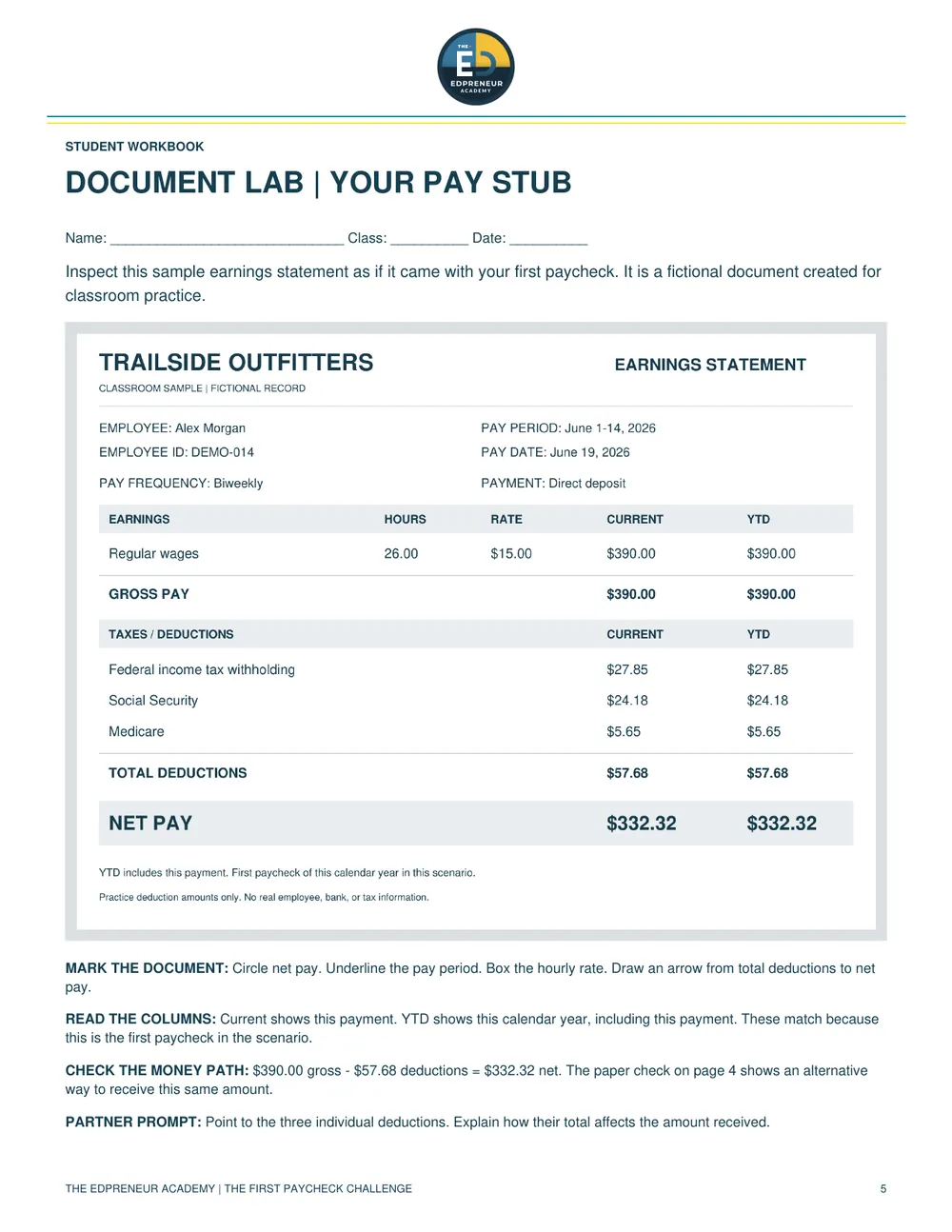
For a paycheck activity, begin with the difference between the amount earned and the amount received. Use a sample pay stub with clear labels. Have students find the important numbers before asking them to calculate anything. Understanding the document is part of the task.
Gross pay and net pay are the two terms I would make sure everyone can explain before moving on. Once students see that the check is smaller than the hourly rate suggested, the budget conversation gets a lot more real.
Turn the Paycheck Into a Budgeting Activity
Then connect that amount to a simple budget. Give students a few necessary expenses, a savings goal, and some choices. Ask them to explain what they would keep, reduce, or delay if the money doesn’t cover everything.
Keep the categories simple. Needs, wants, and savings is plenty for a first budget. You can add more detail once students are comfortable moving money between them.
Try a Wants vs. Needs Activity First
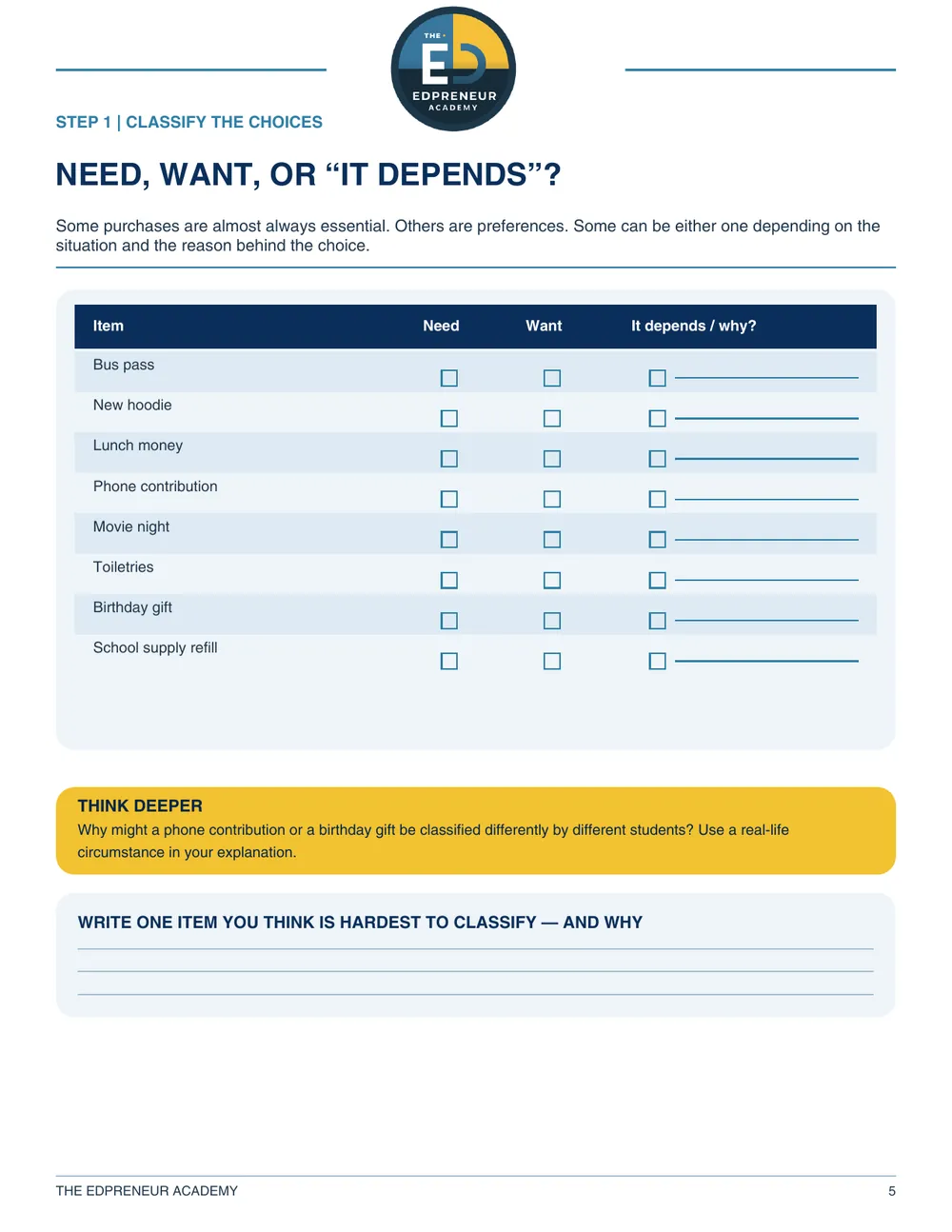
If your students haven’t built a budget before, a wants vs. needs sort is an easy place to start. Give them a list of everyday purchases and ask them to sort each one. Then ask about the tricky ones. Is a phone a need or a want? What about the phone plan? The disagreements are where the learning happens.
Keep Family Money Private
Use examples without asking students to share private family information. Classroom scenarios let everyone take part without explaining household income, debt, or spending. You can still invite students to discuss the reasoning behind a choice.
Car Buying and Other Big Purchases
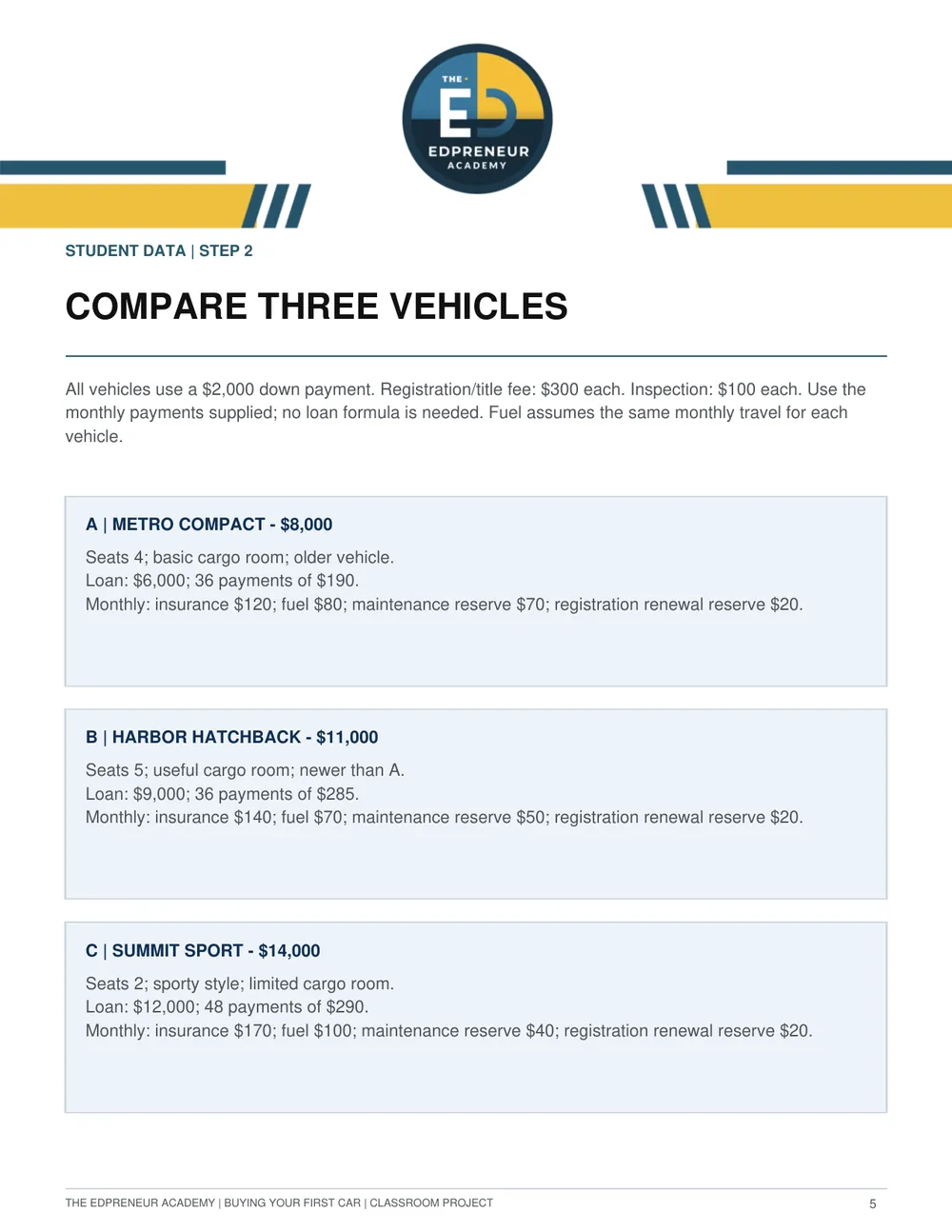
For a larger purchase, help students look beyond the first price. A car, for example, can lead to a discussion of ongoing costs as well as money needed up front. Keep the numbers and categories appropriate for the students’ experience.
A car buying project is a good example. Beyond the sticker price, students can list the costs that keep coming every month:
- Insurance
- Gas
- Maintenance and repairs
- Registration and fees
Ask which of those costs they hadn’t thought about. Most students will name at least one.
Make the Explanation Part of the Work
I would make explanation part of the work. Two students can choose differently and still show careful thinking. Ask what mattered most, what they gave up, and what could change their decision.
Where Investing Fits
If you introduce investing, give it a clear place beside saving and spending. Use a simplified classroom example to discuss uncertainty and time. Avoid making a short simulation feel like a shortcut to easy money.
A stock market game can work well here, as long as the conversation stays on the choices and not just the final balance.
Change the Situation
Finish with a small change to the situation. An expense increases or the available money decreases. Let students adjust the plan instead of starting the whole task over.
More Quick Financial Literacy Activities
Short on time? Here are a few smaller activities that still give students a decision to explain:
- Compare two phone plans and decide which one makes more sense for a given situation
- Plan a grocery list for a week with a set amount of money
- Pick a savings goal and figure out how many weeks it will take to reach it
- Compare the unit price of a small and large package of the same item
- Add sales tax to a shopping list and see how the total changes
- Decide whether to buy a video game now or wait for a sale
Each one fits into a single class period. Each one still ends with a student explaining a choice.
How to Fit Financial Literacy Into Your Week
You don’t need a full unit to start. One activity a week can build a lot of understanding over a semester. I would pick one topic, like budgeting, and stay with it for a few weeks before moving on. Students get more comfortable when the vocabulary keeps coming back.
Using These Activities With High School Students
Many of these activities work in early high school, too. I would just give older students less of the information up front. Let them estimate the costs, then check their estimates against real numbers.
Choose a resource below that fits the decision you want students to practice. Start with one situation, then build from what they understand.
Financial Literacy Unit | Middle School Personal Finance and Business Lessons
Grades: 6th-10th
- Business
- Economics
List price: $6.95
View on TpT
Stock Market Game Activity Bundle for NGPF and Financial Literacy Standards
Grades: 6th-12th
- Applied Math
- Economics
List price: $17.16
4.8 · 5 reviews
View on TpT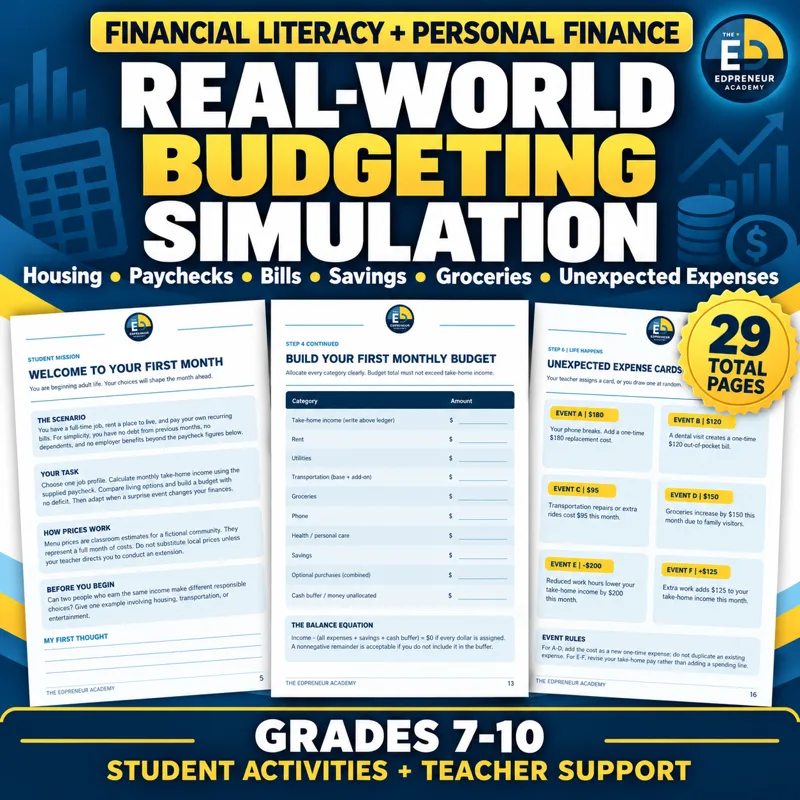
Budgeting Simulation | Financial Literacy Middle and High School Activity
Grades: 7th-11th
- Business
- Economics
- Financial Literacy
List price: $6.95
View on TpT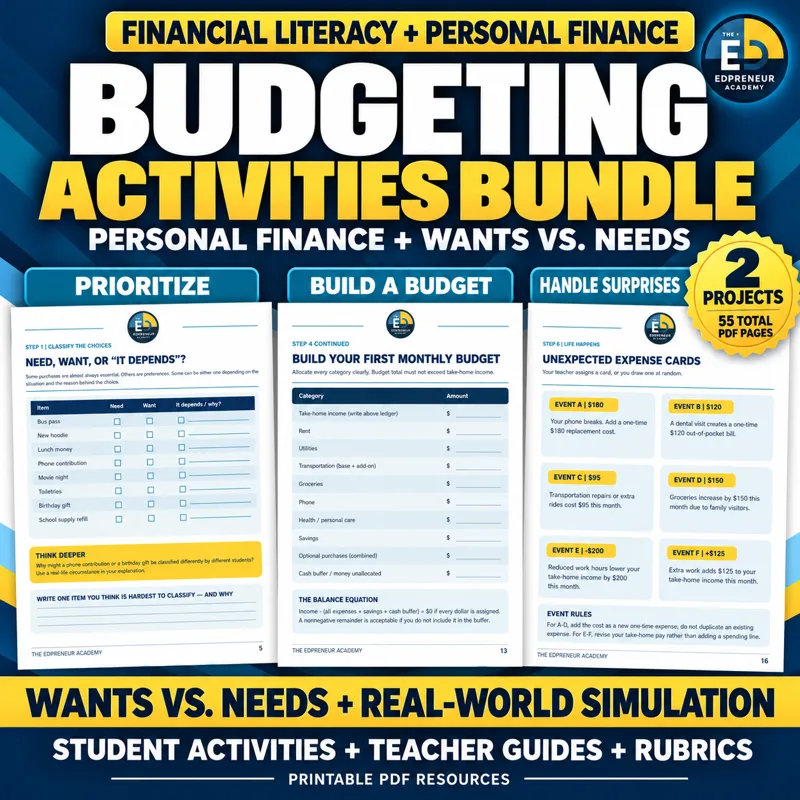
Budgeting Worksheets & Wants vs Needs Bundle | Financial Literacy Activities
Grades: 3rd-11th
- Applied Math
- Business
- Financial Literacy
List price: $11.45
View on TpT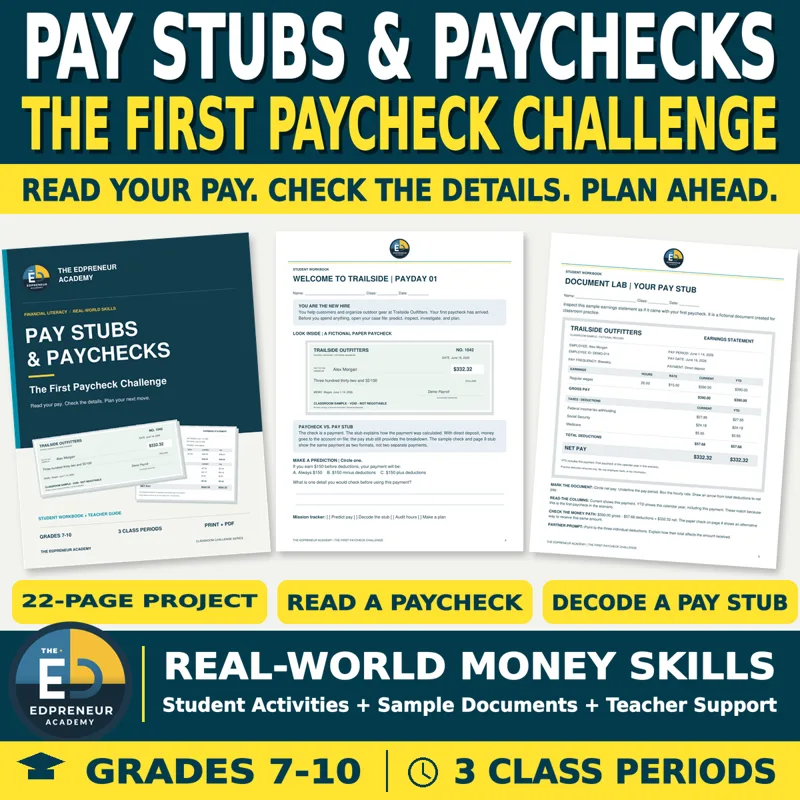
Pay Stubs & Paychecks Activity | Gross & Net Pay | Financial Literacy Project
Grades: 7th-10th
- Applied Math
- Business
- Financial Literacy
List price: $4.50
View on TpT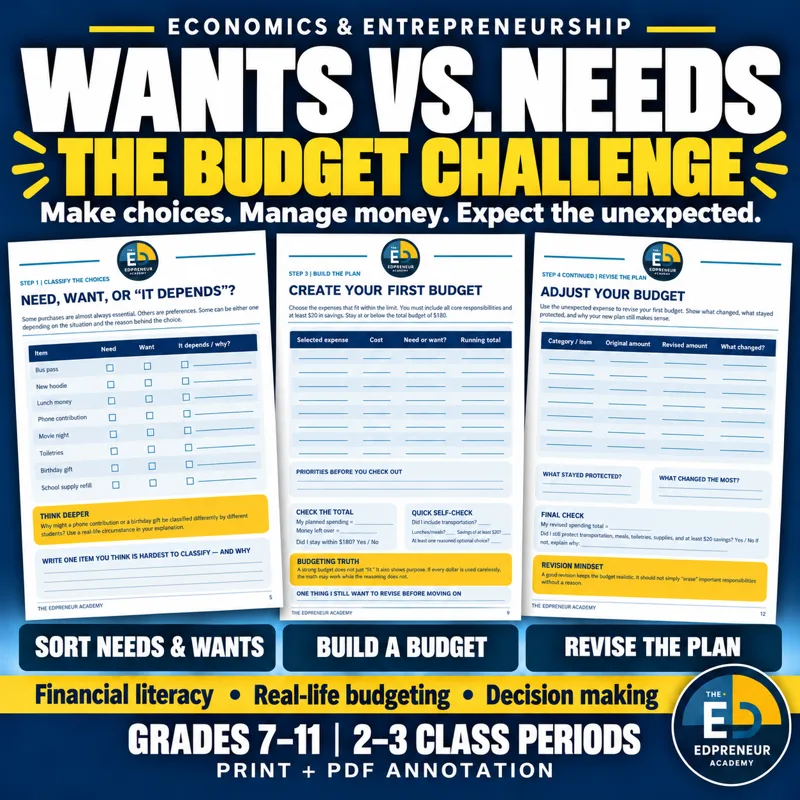
Wants vs Needs Activity | Budgeting Project & Financial Literacy Challenge
Grades: 7th-11th
- Economics
- Financial Literacy
- Other (Social Studies)
List price: $4.50
View on TpT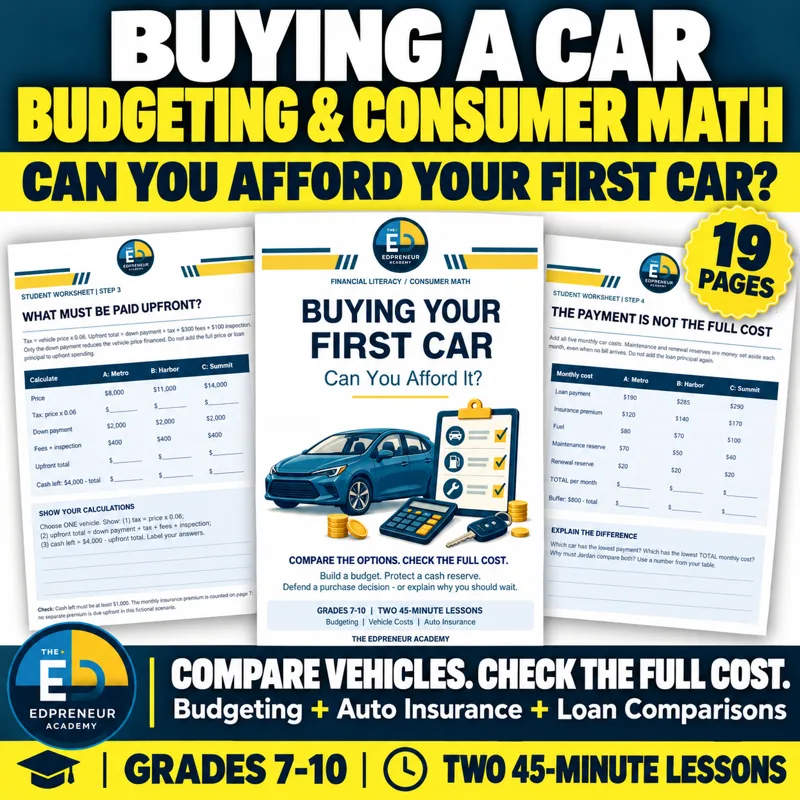
Buying a Car Project | Car Buying Budgeting Worksheets & Consumer Math
Grades: 7th-10th
- Applied Math
- Family Consumer Sciences
- Financial Literacy
List price: $4.50
View on TpT