
Food Truck Project for Students: Ideas, Examples, and a Simple Plan

Need a food truck project for students with enough structure to keep them moving? A truck is a useful starting point because it feels like a smaller business to imagine. But students still have choices to make. Where will they sell? Who will stop? What can they prepare in a limited space? I would use those limits to guide the planning. They give students a reason to narrow an idea instead of adding more to it.
What Students Do in a Food Truck Project
Here’s the basic path I would follow. Students:
- Choose a place the truck will serve
- Describe the customers who will be there
- Plan a small menu
- Price one order and figure out what’s left
- Plan for a busy line
- Name and design the truck
- Pitch the business and explain their choices
You can stretch each step or keep it short. It depends on the time you have.
Food Truck Project Ideas Students Can Start From
Students usually come up with a food quickly. I would ask them for a place first. Here are a few pairings to get them going:
- Breakfast tacos at a Saturday farmers market
- Grilled cheese at a youth soccer tournament
- Smoothies near a park with a walking trail
- Hot chocolate and soup at a winter festival
- Shaved ice at a summer baseball tournament
- Coffee and muffins for a business district’s morning rush
- Healthy bowls outside a gym or rec center
- Pizza by the slice after a Friday night football game
Each idea comes with a place. That’s on purpose. The place tells students who the customer is, how much time that customer has, and what they might pay.
Use the Truck Limits
Begin with the place the truck will serve. Students could plan for a community event, a business district at lunchtime, or a sports tournament. Each location suggests different customers and different time limits.
Ask students to describe what those customers need. Someone between tournament games may care about speed and portability. A customer at an evening event may be looking for something more unusual. Have students explain which need their truck will serve.
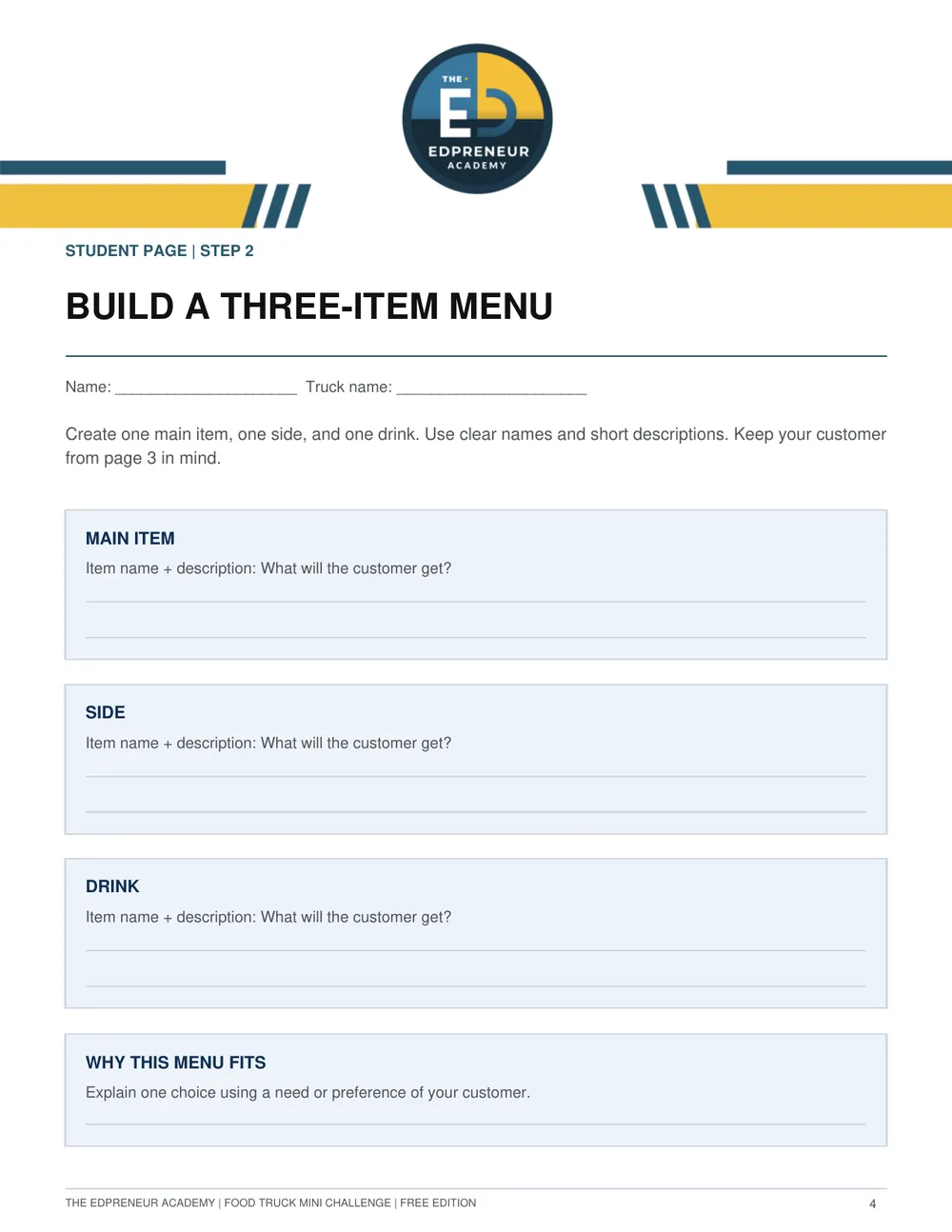
Keep the menu small at first. Three main items can be enough to discuss ingredients, preparation, and price. Ask whether any ingredients can be used across several items. That gives students a simple way to think about waste and planning.
Keep the Food Truck Budget Simple
Next, introduce a basic budget. Separate a few starting costs from costs tied to each sale. Students might consider equipment as a starting cost and food packaging as a cost per order. You can supply classroom estimates so the assignment doesn’t become an open-ended search for equipment prices.
Have students work through one order. What will they charge? What costs come with that sale? What is left before other expenses? This makes the numbers easier to explain than a large total copied into a plan.
Plan for a Busy Line
Then add a service problem. Ten customers arrive together. How will the truck handle orders? What could slow things down? Students can sketch a simple process and decide whether the menu needs to change.
Food Truck Project Examples: What a Finished Plan Can Include
Students often ask what a “good one” looks like. I would show them the parts, not a finished plan to copy. A strong food truck project can include:
- One sentence that names the location and the customer
- A menu of about three items, with a cost for each
- One order worked out from price to what’s left over
- A short list of starting costs
- A plan for ten customers arriving at once
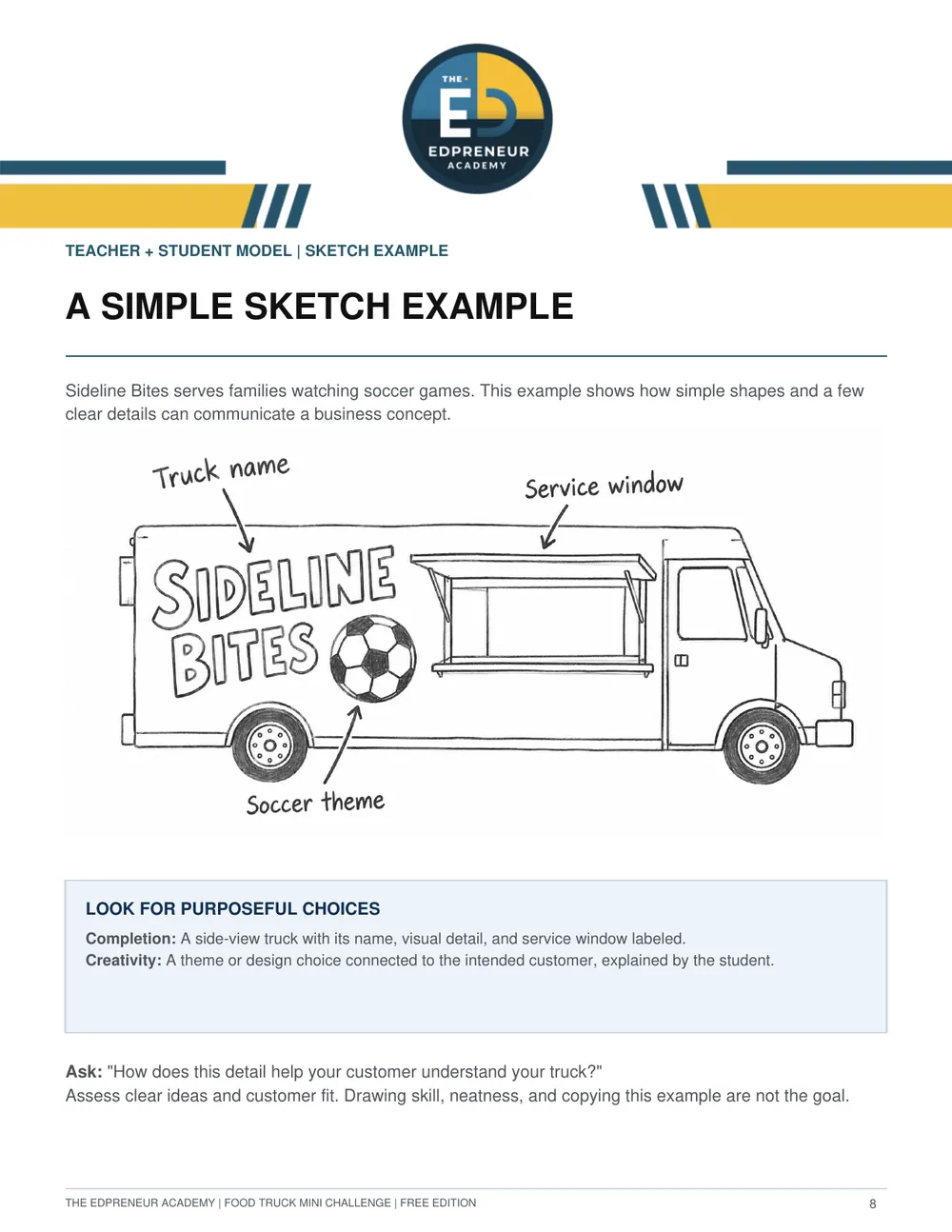
- A truck name and design that fit the customer
- A one-minute pitch that explains the choices
If you want to model it, build one plan together as a class first. Then let students make their own.
Branding and the Pitch
Leave branding until the offer is clear. A name, truck design, or social post should help the intended customer understand what is being sold. Ask students to explain that connection during the pitch.
Before the final presentation, give each group one change to consider: an ingredient costs more, rain reduces attendance, or the event is shorter. Let them revise a choice.
Questions to Ask While Students Plan
Keep a few questions handy while groups work. They help students catch problems on their own.
- Why did you pick this location?
- How long will a customer wait in line?
- Which menu item is the easiest to make quickly?
- Which item makes the most money per order?
- What happens if you run out of your most popular item?
- What would make someone choose your truck over the one parked next to you?
Where a Food Truck Project Fits in Your Class
A food truck project works well after students have learned the basic parts of a business. It gives them a chance to use customer, cost, and pricing ideas in one place. It also works as a stand-alone project at the end of a unit, or as a quick way to start a business plan unit.
How long should it take? A short version can fit in a few class periods. A full plan with a pitch day can take a couple of weeks. Start with what fits your schedule.
Food Truck Project for Middle School or High School?
It works for both. You just adjust how much students find on their own.
For middle school, I would give students the cost estimates and keep the menu to three items. For high school, ask them to research real prices, compare two possible locations, and explain which one makes more sense.
Try a Free Food Truck Project First
Not sure it’s the right fit for your class? I have a free food truck project on TpT you can try first. It’s a quick way to see how your students respond before you plan a bigger unit.
Explore the food truck resources below, and start with one location and one customer.
Food Truck Business Project | Entrepreneurship Activity & Business Plan
Grades: 6th-10th
- Business
- Economics
List price: $5.47
View on TpT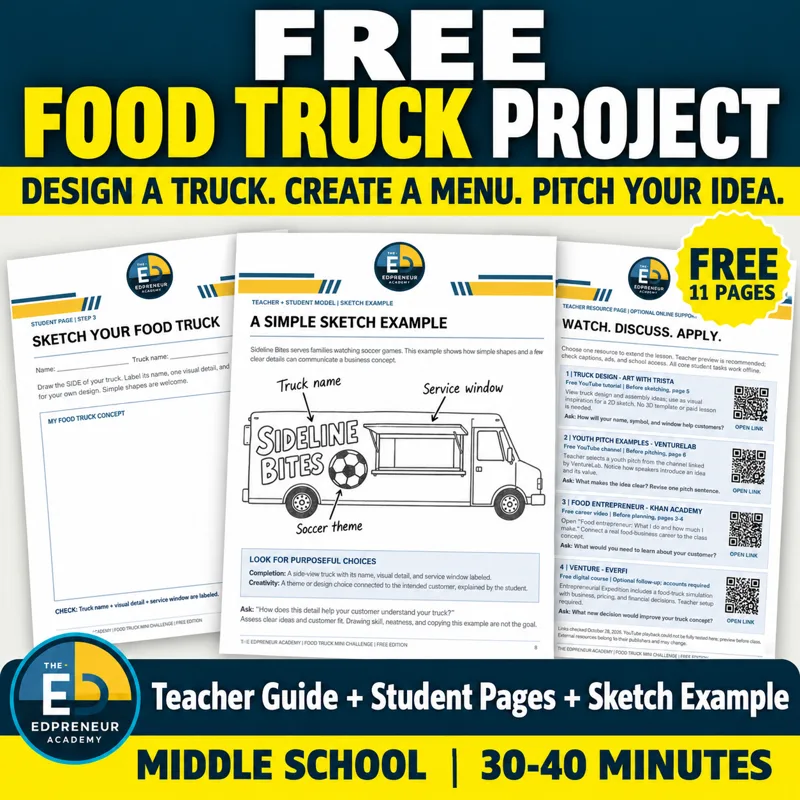
Free Food Truck Project | Middle School Entrepreneurship Activity
Grades: 6th-9th
- Business
- Economics
- Other (Social Studies)
List price: $0.00
View on TpT