
Goods and services activities for 2nd–4th grade

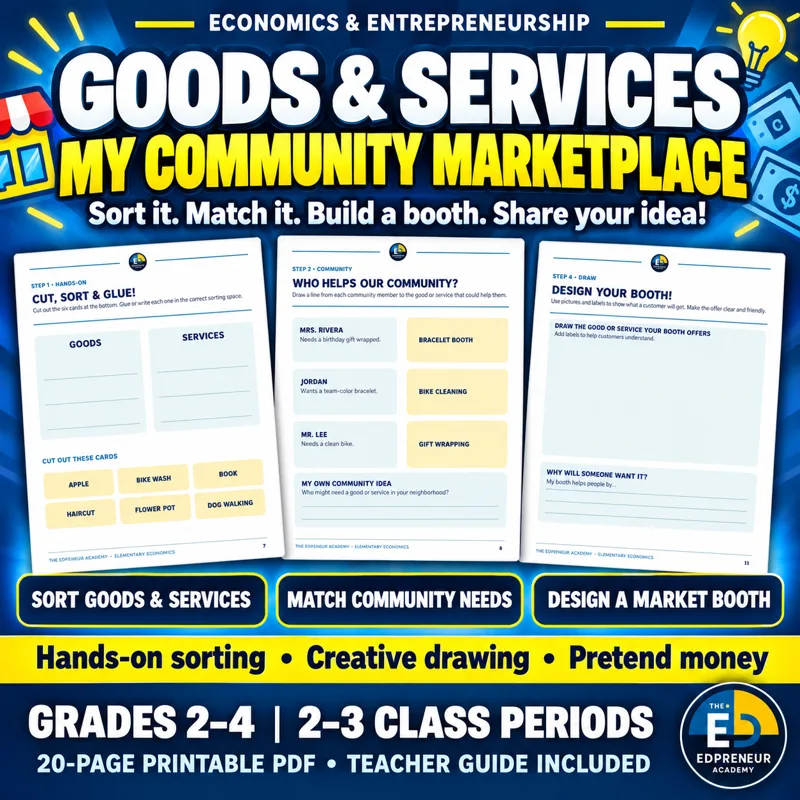
Looking for goods and services activities for 2nd–4th grade that go beyond guessing which box to check? I would start with people and places students know. A bakery, a haircut, a repaired bicycle. Simple examples give students something concrete to talk about. Then you can ask them to explain the difference in their own words. The explanation will tell you more than a correct label on its own.
Start With Familiar Community Examples
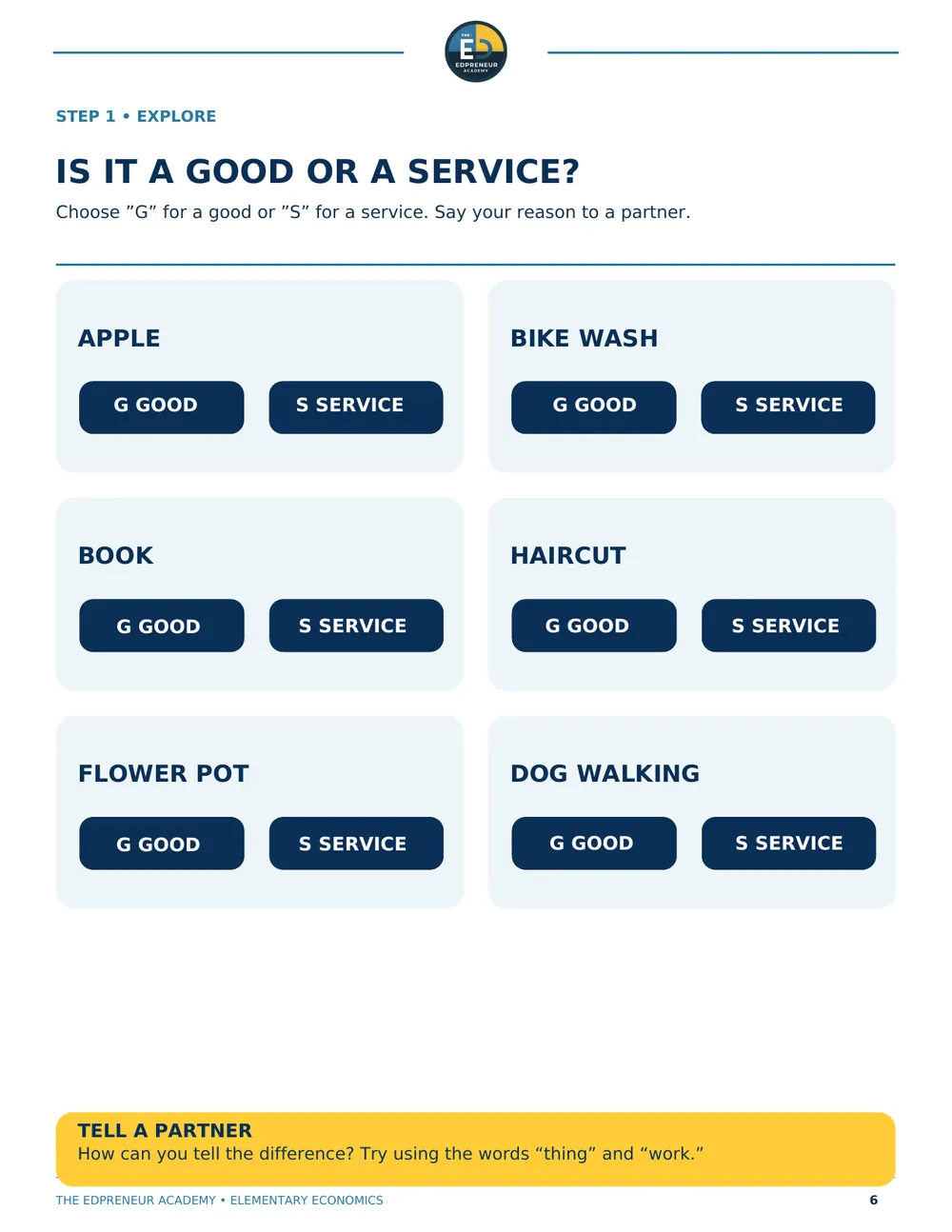
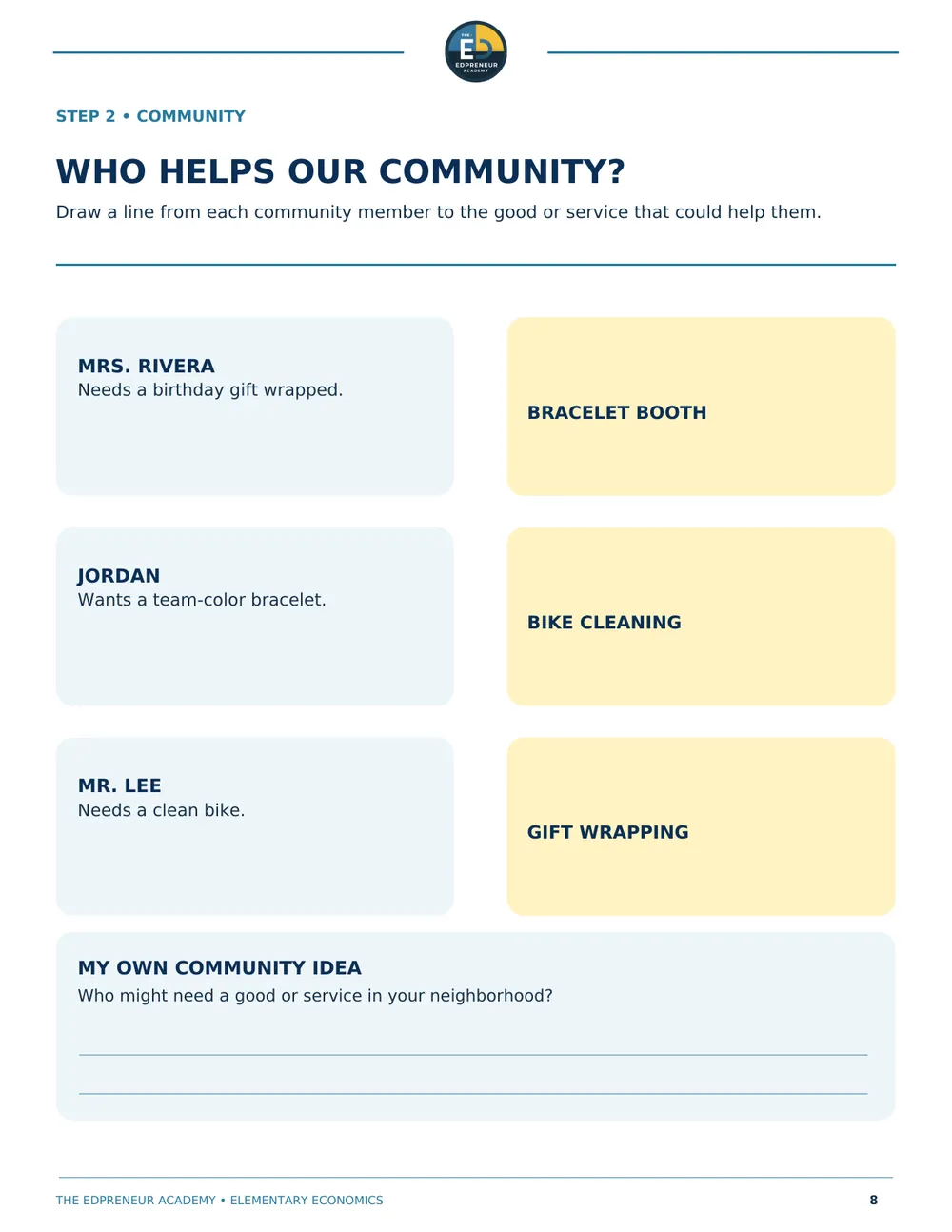
Introduce a good as something people make or grow that others can use. Introduce a service as work someone does for someone else. Keep the wording simple and use a clear example of each before asking students to sort anything.
You might compare buying a loaf of bread with paying someone to cut your hair. Ask what the customer receives in each situation. Let students describe it first, then connect their words to the vocabulary.
Next, use a small set of picture or word cards. Choose examples with obvious differences at the beginning. Have students sort them with a partner and explain one choice aloud. Listening to the explanation helps you see where the idea is still unclear.
Once students understand the basic distinction, add an example that includes both. A restaurant provides food and also work such as preparing and serving it. Ask students to name the part they are classifying. This keeps a useful discussion from becoming a confusing guessing game.
Connect the lesson to producers and consumers if those terms fit your unit. Who makes the item or provides the service? Who uses or buys it? Students can revisit the same example rather than learning new vocabulary through an entirely different situation.
I would finish with a small creation task. Students could draw a simple business, name what it offers, and explain who might use it. They don’t need a long written business plan to practice this thinking.
For younger students, provide sentence starters and let them explain orally. For older students, ask for a short written reason or a second example. Keep the challenge in the explanation rather than adding more copying.
Use an exit question with an example students haven’t sorted yet. Ask them to label it and tell you why.
Explore the elementary economics resource below, and begin with two examples your students can recognize right away.
Goods and Services Activities | 2nd 3rd 4th Grade Economics Sort and Project
Grades: 2nd-4th
- Economics
- Money Math
- Other (Social Studies)
List price: $3.50
View on TpT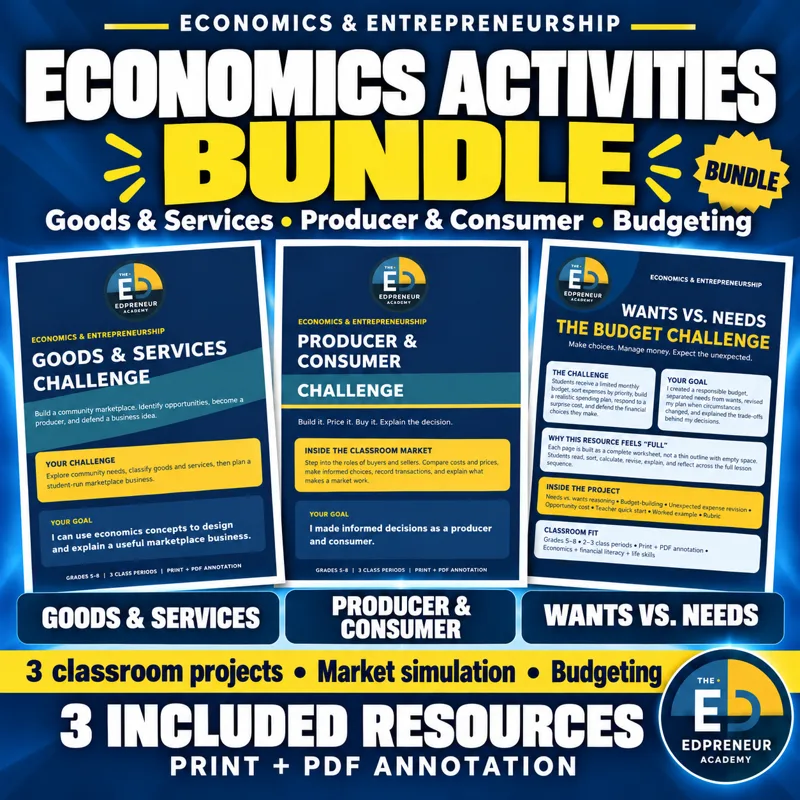
Economics Activities Bundle | Goods & Services, Producers, Consumers, Budgeting
Grades: 5th-11th
- Business
- Economics
- Financial Literacy
List price: $11.50
View on TpT