
High School Entrepreneurship Curriculum: Planning a 9-Week Course

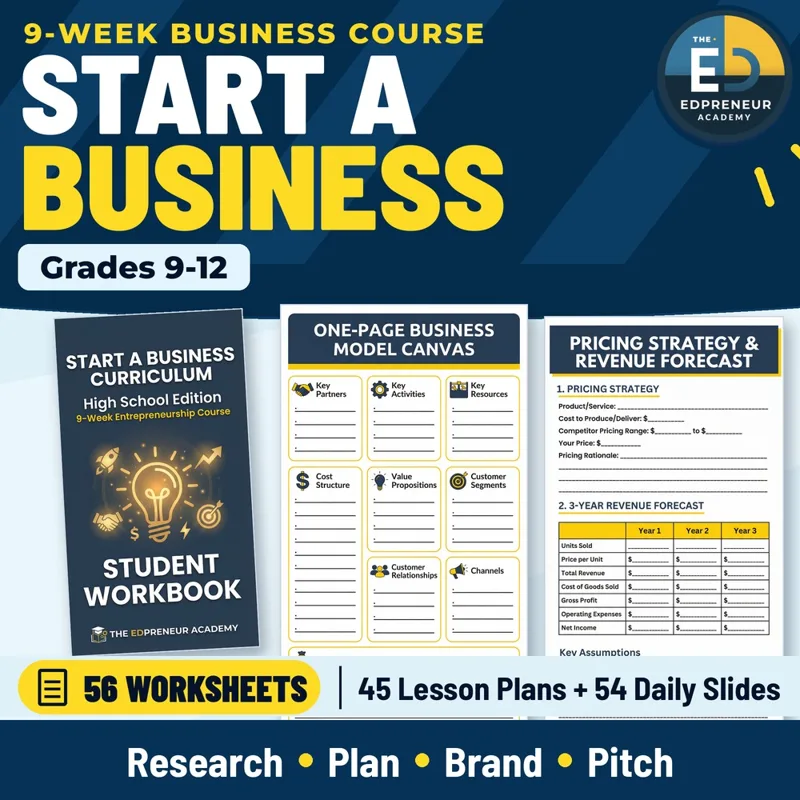
Need high school entrepreneurship curriculum, but don’t want nine weeks of disconnected assignments? I would build the course around an idea students keep developing. That gives research, pricing, and marketing a shared purpose. Students can see where their decisions fit. You can also see whether they understand the business behind the presentation. Before choosing a course, look at how the work connects and how much time students will have to revise it.
Give Each Week a Purpose
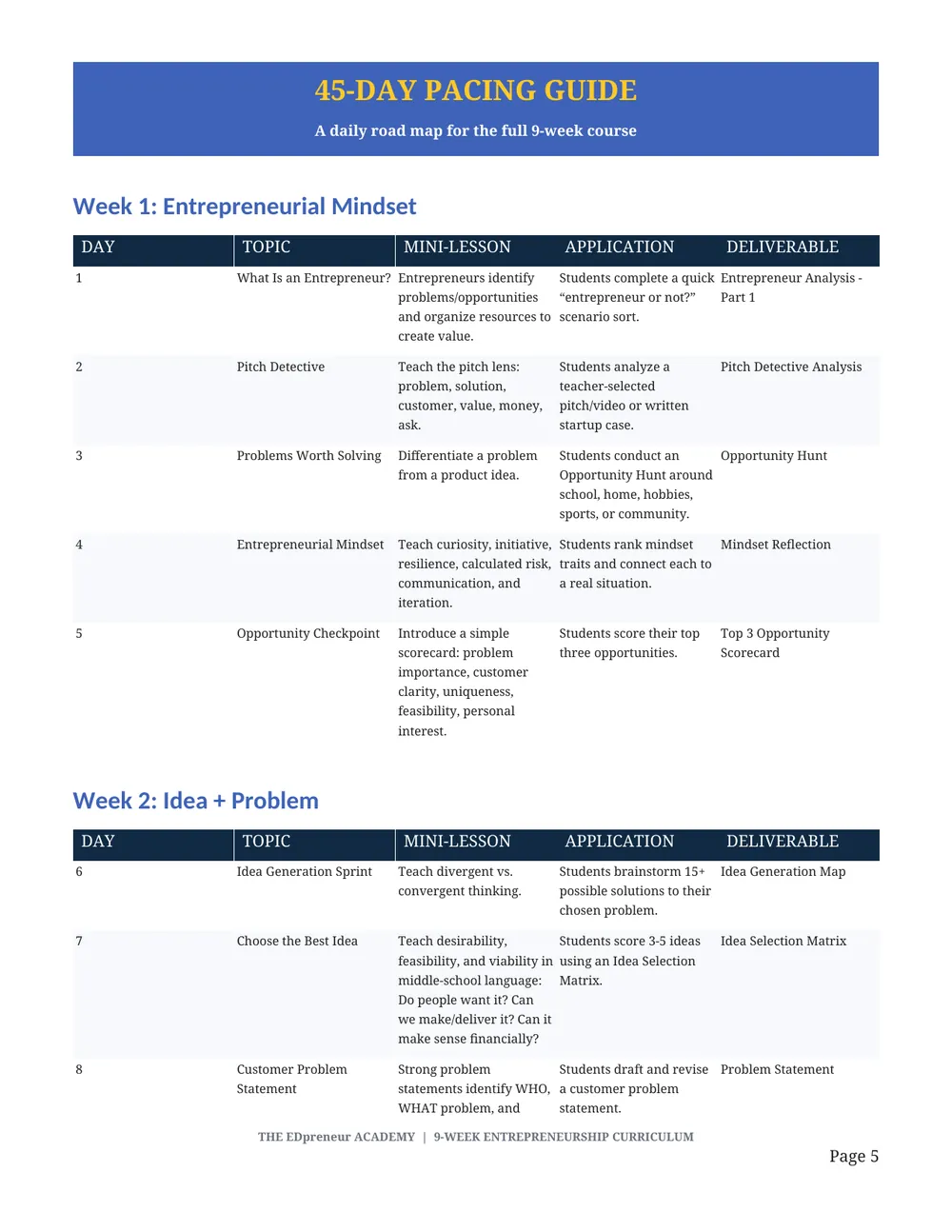

Start with what students should be able to explain at the end. A reasonable goal is a business proposal that identifies a customer, explains an offer, connects costs with pricing, and describes how the business could reach buyers.
During the opening lessons, help students notice problems and opportunities. Let them compare a few ideas before committing to one. Ask what they already know and what they would need to learn. This gives research a practical job.
Once an idea is selected, focus on the customer and existing alternatives. Students should explain how someone handles the problem now. A competitor isn’t always another company selling the same product. Sometimes the alternative is doing nothing.
Move into money with numbers students can trace. Where did the estimated cost come from? What costs change when sales increase? What would still need to be paid if sales were slow? Keep the model simple enough for students to explain.
Then connect marketing to the audience. A campaign aimed at busy parents should look different from one aimed at student athletes. Have students choose a message and a way to deliver it, then explain why those choices fit.
Include a point where the plan has to change. You could give students a higher material cost or a smaller starting budget. Ask what they would adjust and what trade-off that creates. This helps them practice using the plan rather than only completing it.
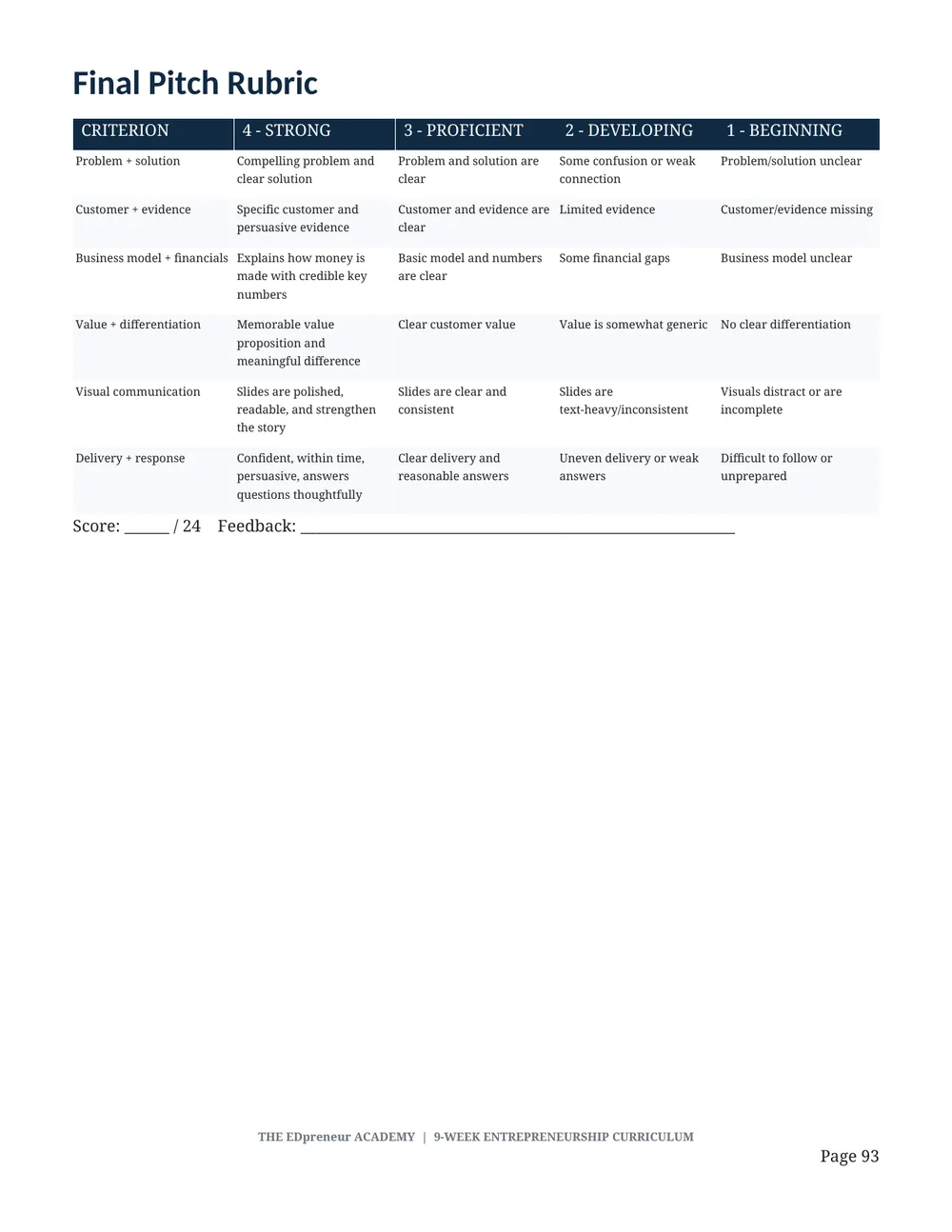
For the final pitch, provide the expectations early. Students need to know whether you are assessing the business reasoning, the presentation, or both. Give separate feedback so strong design doesn’t hide weak understanding.
Before buying a course, check the actual materials and technology requirements against your calendar. Nine weeks can mean very different amounts of class time.
Browse the course options below and choose a starting structure. Then decide where your students will need extra practice, feedback, and time to make the work their own.
Entrepreneurship Curriculum 9-Week Business Course for High School
Grades: 9th-12th
- Business
- Economics
List price: $19.67
View on TpT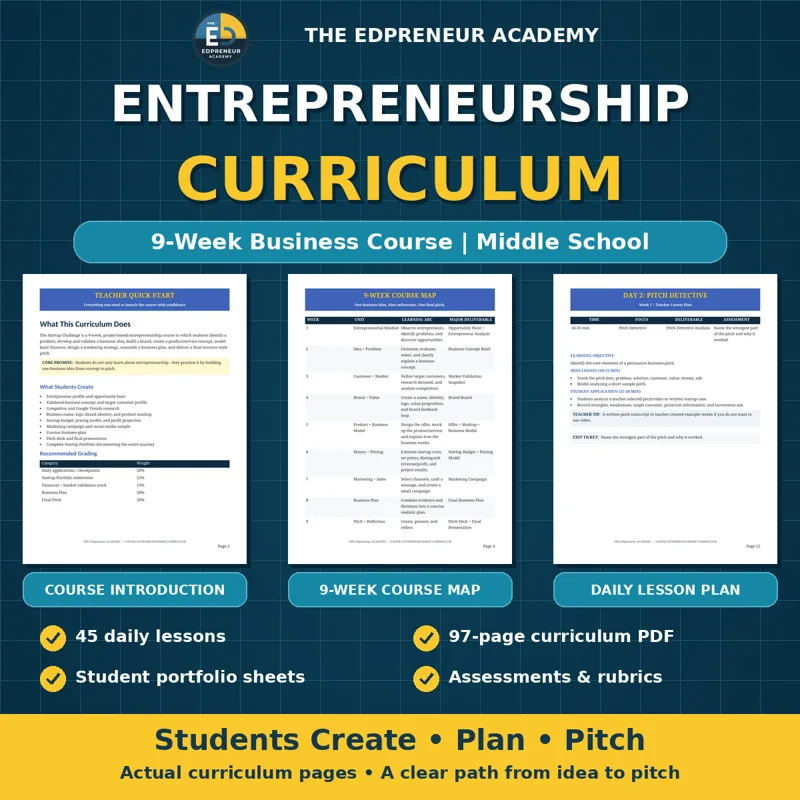
Entrepreneurship Curriculum | 9 Week Intro to Business Activities & Project
Grades: 7th-12th
- Business
- Economics
List price: $14.95
View on TpT
High School Entrepreneurship | Create a Business Plan Unit | Shark Tank-Style
Grades: 7th-11th
- Business
- Economics
List price: $7.67
View on TpT