
Shark Tank-Style Project Ideas for Middle School Students

Looking for Shark Tank-Style project ideas for your middle school students? Or maybe you’ve tried one before, and the presentations were all logos and very little business… I get it. Designing the look of a business is an easy place for students to get excited. The harder part is explaining why anyone would buy from it. I like to keep that question close to the center of the project. It gives students something to figure out before they start building their slides.
Below, you’ll find project ideas your students can start from, plus the checkpoints I would use to keep the business thinking front and center.
What Makes a Good Shark Tank-Style Project Idea?
A good idea doesn’t have to be a brand-new invention. It just has to hold up when someone asks a few simple questions.
Here’s the quick test I would give students before they commit:
- Can you name the problem in one sentence?
- Can you describe one person who has that problem?
- What does that person do about it right now?
- Why would they choose your idea instead?
- Could you explain the whole thing in about a minute?
If a student can’t answer the first two, the idea isn’t ready yet. That’s ok. It’s much easier to fix now than the night before pitch day.
Shark Tank-Style Project Ideas for Middle School Students
Use these as starting points, not assignments. Each one still needs a customer and a problem before it’s a business.
School and Locker Ideas
- A locker organizer for students who carry sports gear and an instrument
- A water bottle lid that stays attached, so it doesn’t get lost
- A homework planner that sorts assignments by due date and size
- A peer tutoring service for younger students
- A school supply swap at the end of the year
Sports and Activities Ideas
- A cleat bag that keeps mud off everything else in the backpack
- A team snack sign-up service for busy parents
- A drying rack for shin guards and gloves
- A reminder app that checks for practice gear before you leave home
- A cooling towel for summer practices
Food and Snack Ideas
- A healthy snack box for after-school activities
- A lunch-packing service for families with early mornings
- A food truck that serves the stands at Friday night games
- A bakery that makes allergy-friendly birthday treats
Home and Pet Ideas
- A dog-walking service with a simple weekly schedule
- A pet water bowl that doesn’t tip over in the car
- A chore chart app for younger siblings
- A charging station that keeps phones out of bedrooms at night
Community and Environment Ideas
- A recycling pickup service for neighbors who forget bin day
- A tool-lending library for a neighborhood
- A reusable shopping bag that folds into a keychain
Digital and Creative Ideas
- A video editing service for local small businesses
- A custom sticker shop
- A social media service for a local business or school club
- A design service that makes flyers for school events
Notice that most of these are small. That’s on purpose. A simple idea leaves more room for the business thinking.
Start With the Customer
Before students name their company, ask them to name a person they want to help. “Everyone” is a tempting answer. It’s also a hard audience to plan for. Help them narrow it down to someone they can describe.
A student might want to sell a better water bottle. Fine. Who needs it? A student athlete carrying equipment? A younger child who keeps losing the lid? Those customers might need very different products.
Next, have students explain the problem in one sentence. Then ask what the customer does about it now. This keeps the discussion connected to a real need, even when the proposed business is only a classroom idea.
Use Checkpoints Before Pitch Day
I would use a few short checkpoints before presentation day. First, review the customer and problem. Next, look at the proposed solution and a basic price. Then ask students to show how they would reach that customer. You can catch confusion while there’s still time to change the plan.
Give students a simple cost example, too. If something costs four dollars to make and sells for six, the whole six dollars isn’t profit. Ask what else might need to be paid for. The point is to get them asking better questions, without turning the project into an accounting course.
How to Set Up the Pitch
For the pitch, set the expectations early. Students should explain the problem, describe the business, show their basic numbers, and answer questions. A clear idea with sensible reasoning should matter more than a polished presentation.
You can let classmates act as potential investors. Ask them to write one useful question before offering an opinion. “Who would buy this?” is a much better starting point than “I don’t like it.”
Questions Students Should Be Ready to Answer
Share these before pitch day, not during it. Nobody likes a surprise quiz in front of the class.
- Who is your customer?
- What problem are you solving for them?
- What do they do about it now?
- How much does it cost to make or deliver?
- What will you charge, and why?
- How will customers find out about you?
- What would you change if sales were slower than you expected?
Easy Shark Tank-Style Project Ideas for Younger Students
Working with upper elementary or early middle school? Keep the ideas close to home. Students do their best thinking when they already know the customer.
- A lemonade stand with a second drink option for kids who don’t like lemonade
- A backpack tag that holds a family phone number
- A bookmark that keeps track of reading minutes
- A recess equipment check-out system for the class
- A pet rock business with a care guide (yes, really… the pitch gets fun)
Group or Individual Projects?
Either one can work. Groups give students someone to test ideas with, and the pitch feels less scary. Individual projects make it easier to see what each student understands. I would let students brainstorm together, then decide whether to keep going as a group or split off.
If you go with groups, give each person a job before the planning starts. Someone owns the numbers. Someone owns the customer research. Someone owns the pitch. Everyone answers questions.
How Long Should a Shark Tank-Style Project Take?
It depends on how deep you want to go. A short version, with one idea, a basic price, and a quick pitch, can fit into a few class periods. A full business plan with checkpoints and a formal pitch day can take a few weeks.
My advice? Start small the first time. You can always add pieces once you see how your students handle it.
Shark Tank-Style Projects for High School Students
Teaching older students? The same structure works. I would just raise the bar on the evidence. Ask high school students to research a real competitor, explain where each number came from, and revise one part of the plan after feedback. The pitch should show what changed and why.
End With a Reflection
End with a short reflection. What question caught the presenter off guard? What would they change? That’s where the pitch becomes another part of learning.
Choose a project below that fits your class, and start with the customer.
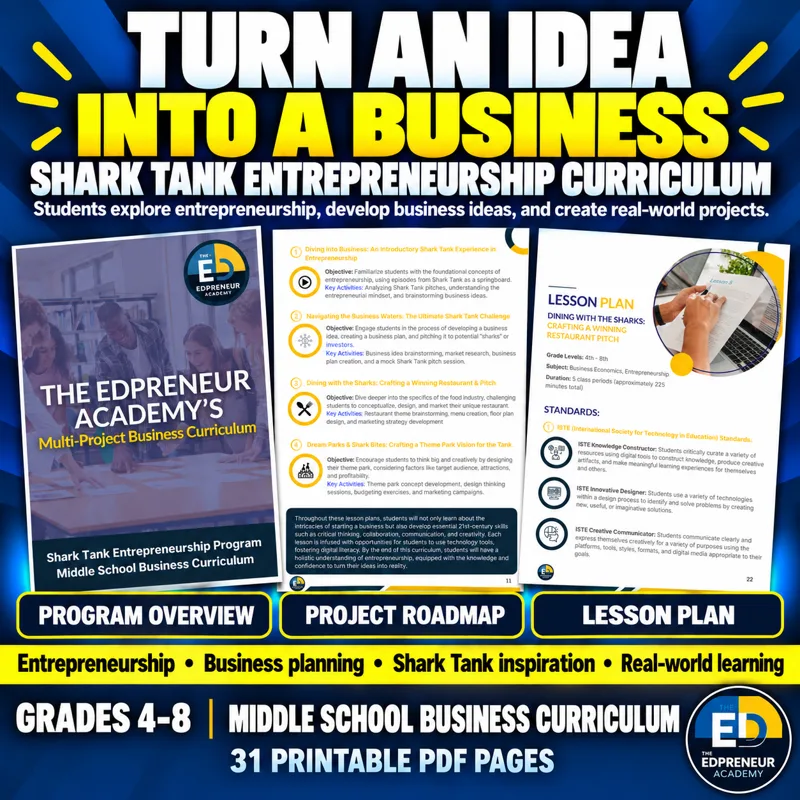
Shark Tank-Style Entrepreneurship Curriculum | Middle School Business Lessons
Grades: 4th-9th
- Business
- Economics
List price: $11.50
4.75 · 8 reviews
View on TpT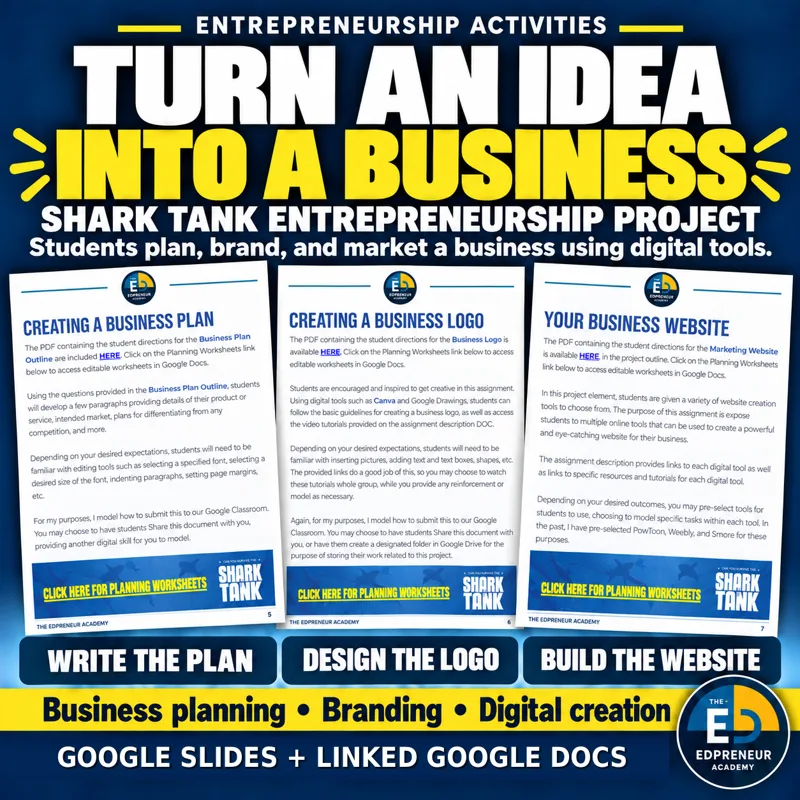
Shark Tank-Style Entrepreneurship Project | Business Plan, Logo & Website
Grades: 6th-11th
- Business
- Economics
- Graphic Arts
List price: $5.50
4.73 · 41 reviews
View on TpT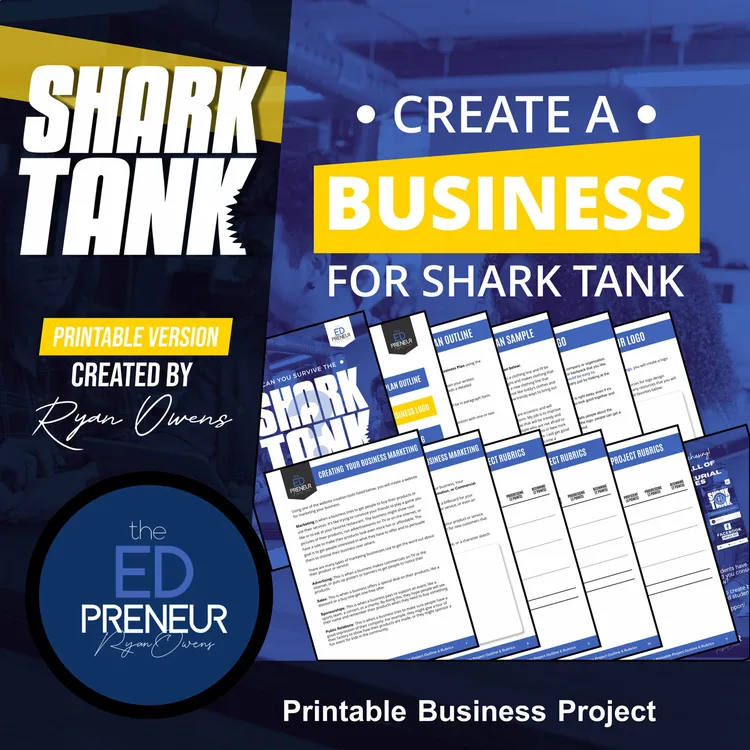
Shark Tank-Style Entrepreneurship Unit | Middle School Business Plan Project
Grades: 4th-8th
- Business
- Economics
- Graphic Arts
List price: $5.97
View on TpT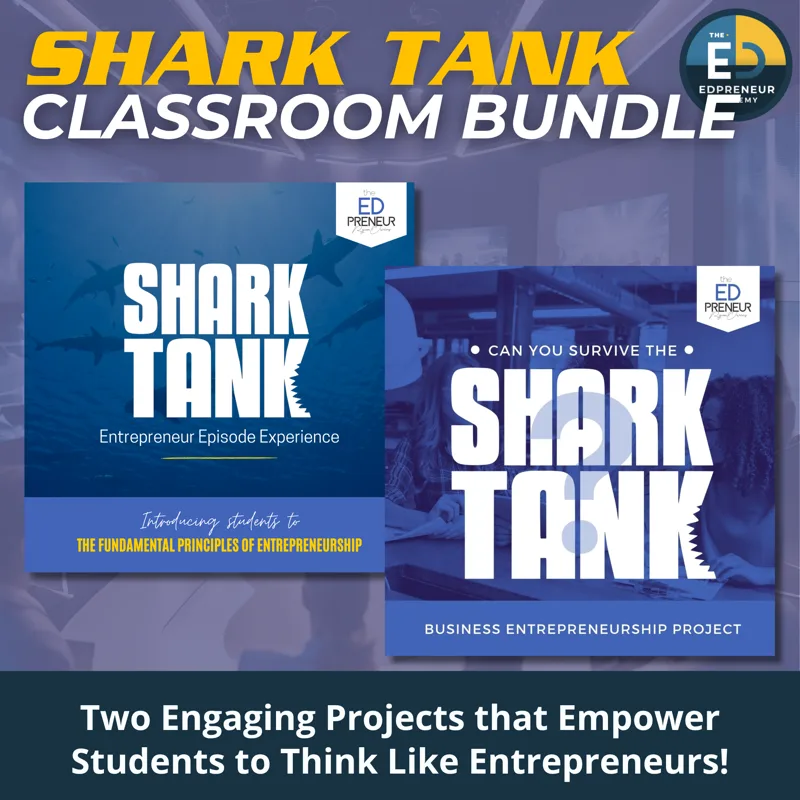
Shark Tank-Style Entrepreneurship Project | Create a Business Plan and Pitch
Grades: 6th-10th
- Business
- Economics
List price: $12.54
View on TpT